
In our increasingly digital world, the simple act of stepping into nature has become a revolutionary form of self-care and healing that science is only beginning to fully understand.

Modern life keeps us tethered to screens, confined within concrete walls, and disconnected from the natural world that our ancestors knew intimately. This separation comes at a cost—rising stress levels, mental health challenges, and a sense of emptiness that material comforts cannot fill. Yet the remedy might be simpler than we think: reconnecting with the forests, parks, and green spaces that surround us.
Forest bathing, known as “Shinrin-yoku” in Japan where it originated, offers a scientifically-backed path to wellness through mindful immersion in nature. Unlike hiking or exercise, this practice focuses on sensory engagement with the natural environment, allowing the forest atmosphere to wash over you like a healing balm. The results are remarkable, with research documenting measurable improvements in physical and psychological health.
🌲 Understanding the Ancient Practice of Shinrin-Yoku
The Japanese Ministry of Agriculture, Forestry, and Fisheries coined the term “Shinrin-yoku” in 1982 as part of a national public health program. Translated literally as “forest bath,” the practice doesn’t involve water but rather immersing your senses in the forest atmosphere. This wasn’t merely a cultural tradition but a response to rising stress-related illnesses in Japan’s rapidly modernizing society.
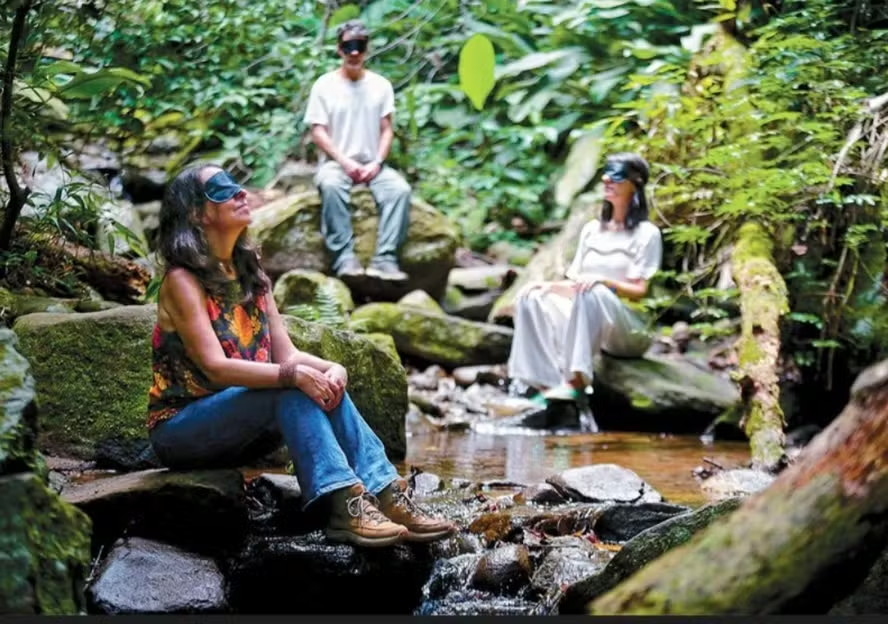
Forest bathing differs fundamentally from conventional outdoor activities. There’s no destination to reach, no fitness goal to achieve, and no rush to get anywhere. Instead, practitioners move slowly through natural settings, opening their senses to the sights, sounds, smells, and textures surrounding them. A typical session lasts two to four hours, covering perhaps just a mile or two of gentle walking.
The practice has since spread globally, with certified forest therapy guides now leading sessions across Europe, North America, and beyond. Medical professionals increasingly recognize its therapeutic potential, with some doctors even prescribing nature time as part of treatment plans for various conditions.
The Science Behind Nature’s Healing Touch 🔬
Skeptics might dismiss forest bathing as pseudoscience or new-age wellness trends, but rigorous research tells a different story. Scientists have documented specific physiological changes that occur when humans spend mindful time in nature, revealing mechanisms through which forests literally heal us.
Dr. Qing Li, a leading researcher in forest medicine at Nippon Medical School in Tokyo, has conducted extensive studies measuring the impact of forest environments on human health. His research demonstrates that forest bathing significantly boosts the immune system by increasing natural killer (NK) cells, which play a crucial role in fighting infections and cancer.
Phytoncides: Nature’s Airborne Medicine
Trees and plants emit aromatic compounds called phytoncides to protect themselves from insects and decay. When we breathe these volatile organic compounds, they trigger beneficial responses in our bodies. Studies show that phytoncide exposure increases NK cell activity by up to 50%, with effects lasting up to a month after a single forest visit.
These natural chemicals also reduce stress hormone production. Research participants spending time in forests showed significantly lower cortisol levels, reduced blood pressure, and decreased heart rate compared to those in urban environments. The parasympathetic nervous system—responsible for rest and recovery—becomes more active, while the sympathetic nervous system associated with fight-or-flight responses calms down.
Mental Health Benefits: More Than Just Feeling Good 🧠
Beyond physical improvements, forest bathing profoundly impacts psychological well-being. Multiple studies document reductions in anxiety, depression, anger, and confusion following forest therapy sessions. Participants consistently report improved mood, increased vigor, and enhanced feelings of gratitude and connection.
A Stanford University study found that walking in nature decreases rumination—the repetitive negative thought patterns associated with depression and anxiety. Brain scans revealed reduced activity in the subgenual prefrontal cortex, a region linked to mental illness risk. Urban walks produced no such effect, highlighting the unique influence of natural environments.
Attention restoration theory explains another mental benefit. Modern life demands constant directed attention, depleting our cognitive resources and causing mental fatigue. Natural settings engage our attention effortlessly, allowing directed attention mechanisms to rest and replenish. This restoration improves focus, creativity, and problem-solving abilities.
Breaking the Stress Cycle
Chronic stress has reached epidemic proportions, contributing to heart disease, diabetes, depression, and weakened immunity. Forest bathing interrupts this destructive cycle by activating the body’s relaxation response. Regular practice can recalibrate stress reactivity, helping practitioners respond more calmly to life’s challenges even when not in nature.
The practice also combats nature deficit disorder, a term describing the human costs of alienation from nature, particularly in children. While not a medical diagnosis, the concept recognizes how disconnection from natural environments contributes to behavioral problems, anxiety, depression, and reduced cognitive functioning.
How to Practice Forest Bathing: A Beginner’s Guide 🌿
Starting a forest bathing practice requires no special equipment or athletic ability—just willingness to slow down and pay attention. Here’s how to begin your journey into nature therapy:
Choosing Your Location
While old-growth forests offer the richest experience, any natural setting with trees provides benefits. Urban parks, botanical gardens, nature reserves, or tree-lined trails all work. Prioritize locations where you feel safe and can minimize interruptions. The ideal setting offers diverse sensory experiences—rustling leaves, bird songs, flowing water, varied textures and colors.
Setting Aside Time
Dedicate at least two hours for a meaningful session, though even shorter visits provide value. Choose times when locations are less crowded if possible. Early morning offers unique light and active wildlife, while evening forest bathing has a distinctly different, often calming quality.
The Practice Itself
Leave your phone behind or switch it to airplane mode. Begin by standing still for several minutes, taking deep breaths and consciously releasing the concerns you brought with you. Notice how your body feels, acknowledging any tension or discomfort without judgment.
Start walking very slowly—slower than feels natural. This isn’t about distance or exercise. Pause frequently to engage your senses:
- Sight: Observe the play of light through leaves, the textures of bark, the movement of branches, the subtle color variations in foliage
- Sound: Close your eyes and identify different sounds—wind, water, birds, insects, rustling leaves
- Smell: Breathe deeply, noticing the forest’s earthy scent, the freshness after rain, the fragrance of flowers or pine
- Touch: Feel tree bark, moss, leaves, cool earth, or stream water (where appropriate)
- Taste: If you’re knowledgeable about edible plants, sample safe options, or simply taste the fresh air
Mindful Presence
When your mind wanders to daily concerns—and it will—gently redirect attention to sensory experiences. This isn’t meditation in the formal sense, but rather receptive awareness. Let the forest guide your attention rather than forcing focus on any particular element.
Find a spot that calls to you and spend extended time there. Sit against a tree, beside a stream, or in a sunny clearing. Simply be present without agenda or expectation. This stillness often yields the deepest benefits.
🌍 Nature Therapy Beyond Forest Bathing
While forest bathing represents one powerful approach, the broader field of nature therapy encompasses various practices that leverage the healing power of natural environments.
Ecotherapy and Green Exercise
Ecotherapy formally integrates nature exposure into mental health treatment. Therapists might conduct sessions outdoors, assign nature-based homework, or incorporate elements like gardening into treatment plans. Research supports its effectiveness for depression, anxiety, stress-related disorders, and ADHD.
Green exercise combines physical activity with nature exposure, amplifying benefits beyond what either provides alone. Even five minutes of outdoor exercise in natural settings produces measurable mood improvements and self-esteem boosts.
Horticultural Therapy
Growing and tending plants offers therapeutic benefits particularly valuable for those with limited mobility or access to wild spaces. Horticultural therapy programs help veterans with PTSD, elderly individuals combating isolation, and rehabilitation patients recovering from injury or illness.
Blue Space Therapy
Water environments—oceans, lakes, rivers, and streams—provide distinct therapeutic benefits. The sound of water has particularly strong calming effects, while negative ions abundant near moving water may boost mood. Coastal walks and riverside forest bathing combine multiple healing elements.
Integrating Nature Connection Into Daily Life 🏡
Extended forest bathing sessions provide profound benefits, but regular brief nature contacts throughout daily life create cumulative positive effects.
Start your day with a few minutes outside, even if just in your yard or on a balcony. Notice the weather, the sky, any plants or animals present. This simple ritual sets a calmer tone for the day ahead.
Take work breaks outdoors when possible. A five-minute walk among trees or sitting in a park restores mental energy more effectively than scrolling social media or drinking another coffee.
Bring nature indoors through houseplants, which improve air quality while providing psychological benefits. Even viewing nature photographs or listening to nature sounds produces measurable stress reduction, though these pale compared to actual outdoor experiences.
Create rituals around seasonal changes—the first spring wildflowers, autumn color transformations, winter’s stark beauty. These mark natural time rather than purely calendar time, reconnecting you with Earth’s rhythms.
Overcoming Barriers to Nature Connection 🚧
Many people face genuine obstacles to accessing nature regularly. Urban environments, mobility limitations, safety concerns, time constraints, and weather conditions all create challenges.
If you lack nearby forests, seek whatever green space exists—neighborhood street trees, community gardens, potted plants on a balcony. Research shows that any nature contact provides value, with benefits scaling with quantity and quality but starting from very modest exposure.
Safety concerns, particularly for women and marginalized groups, are legitimate. Consider joining guided forest bathing groups, bringing trusted companions, or choosing well-populated locations during daylight hours. Some communities offer nature therapy programs specifically designed for vulnerable populations.
For those with mobility limitations, accessible trails and parks with paved paths enable wheelchair users and others to experience nature. Sitting in one beautiful spot provides full forest bathing benefits without requiring extensive walking.
The Future of Nature-Based Healthcare 🌱
As evidence accumulates, healthcare systems are beginning to recognize nature therapy’s potential. Some physicians now write “nature prescriptions” specifying time outdoors as part of treatment plans. Park prescription programs partner doctors with park systems to facilitate patient access to green spaces.
South Korea has invested heavily in forest healing programs, establishing healing forests with professional staff and evidence-based programs. The National Health Service in Scotland supports nature-based interventions, while organizations across North America promote similar initiatives.
This represents a shift toward preventive, holistic healthcare addressing root causes of illness rather than merely treating symptoms. Given that nature therapy produces no negative side effects and costs virtually nothing, its potential public health impact is enormous.
Taking Your First Steps Into Forest Healing 🥾
The path to reconnecting with nature begins with a single step—literally. You don’t need special training, expensive equipment, or exceptional fitness. You simply need willingness to slow down, open your senses, and allow nature to work its ancient magic.
Start this week. Identify a natural area you can visit, schedule two unhurried hours, and go with no agenda beyond being present. Notice how you feel beforehand and afterward. Most people report immediate positive changes—calmer mind, lighter mood, renewed energy.
Make it regular rather than occasional. Weekly forest bathing provides substantial benefits, while monthly sessions still offer value. Even daily brief nature contacts accumulate powerful effects over time.
Consider joining a guided session led by a certified forest therapy guide. These trained professionals create safe, supportive experiences that often deepen practice beyond what beginners achieve alone. Many offer introductory sessions or sliding-scale fees.
Remember that this isn’t another item for your productivity checklist or optimization routine. Forest bathing invites you to simply be rather than constantly do—a radical act in our achievement-obsessed culture. The forest asks nothing of you except presence. In return, it offers healing gifts that modern medicine is only beginning to understand and can never fully replicate.
Our ancestors knew intuitively what science now confirms: we are nature, and returning to wild places returns us to ourselves. In the shelter of trees, beside flowing water, beneath open sky, we remember who we are beneath the roles we play and problems we carry. This remembering itself is healing.
The forest waits patiently, as it always has, ready to receive you whenever you’re ready to return home. 🌲✨